
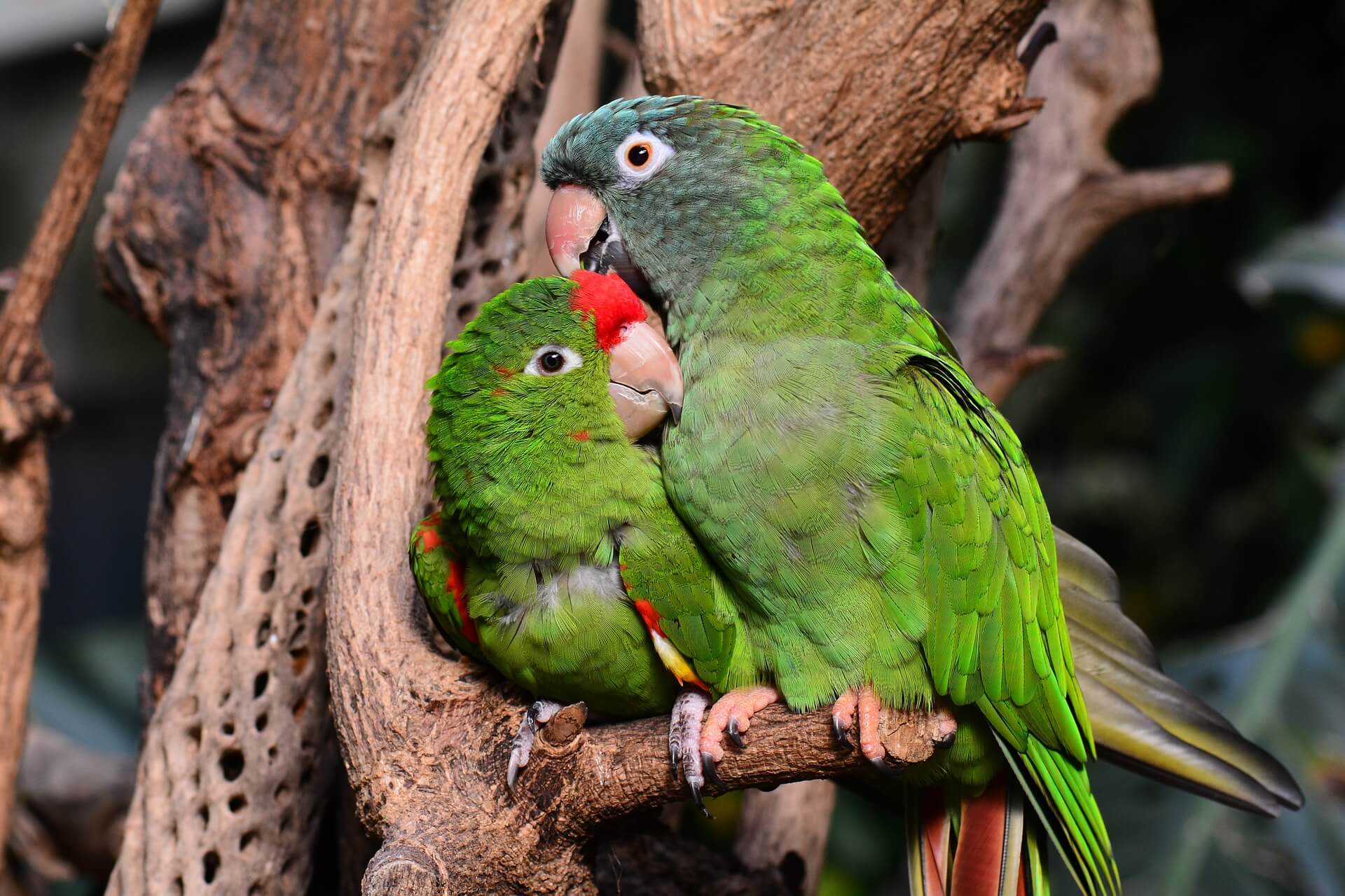
Ask anyone who owns a pet what the biggest joy is, and they will typically tell you it is the company. The aspect of spending time with another living creature. They do not have to speak your language – or any language – to enjoy their company and presence. They do not have to be something that you can tell what to do and get an exact response. They do not even need to interact with you on a moment-to-moment basis. For that reason, many people love having pets in their lives. For those who cannot handle dogs or cats, the most common pets, birds are often a fine alternative. What about love birds?
The lovebird has become a beloved set of bird species to look into. When in your life, they can add light and energy to an otherwise dull or dreary moment in existence. For that reason, the lovebird is seen by many as the ideal pet for home. Yet, ask yourself this – do you know what a lovebird is? Do you know there are more than one species of lovebird?
In total, we know of nine different species of lovebird that are found across the world. They are all majestic, magisterial creatures who are fun to spend time around. However, not all of these are going to be found in the local pet shop. Some are more exotic, and thus rarer than others. To help you better understand the lovebird and their history, read on.
What is a lovebird?
Lovebirds are a species of bird which primarily hail from the African continent. They are usually seen living in small groups, or flocks. Typically part of the Agapornis family of birds, each species of lovebird is related in some capacity or another.
If you happen to come across a lovebird in a pet shop, it is likely because it is one of three breeds. You can find more detail about each breed below, but they are the Black Masked, Fischer, and Rosy-Faced lovebird. These three breeds are very commonly found as pets, but the other six are very much a rarity to find in captivity of any kind.
Sadly, some of the most popular lovebird species are now approaching vulnerable status. This means that we have to be very conscious about how we look after lovebirds, and how we prepare the environment for them.
However, many of these breeds thrive in captivity. They are seen as some of the best bird pets because they are so engaging. If you want a pet in your life who adds color and charm to the entire room, few pets can do a better job than lovebirds. What, though, are the nine major species of lovebird?
The 9 major species of lovebird
Rosy/Peach Faced Lovebird
The first breed that we think is worth noticing is the Rosy-Faced, or Peach-Faced lovebird. These are very popular as pets and are probably the most common species of lovebird that you will find commonly kept as pets. They are gorgeous, known for their stunning plumage and their intense looks.
They are birds that are most commonly associated with the wider lovebird culture. Typically known for their rich green bodies with peach or rosy colored faces, these lovebirds really do manage to live up to the name they have embodied. Few breeds of lovebird are more popular and they are seen as very easy to look after and care for.
However, when you first bond together, you need to be careful and patient; they can become aggressive until they properly get to know and understand you and your family.
Red Faced Lovebird
Another option that is similar to the above but albeit rare is the red-faced lovebird. These are gorgeous and are known for their friendly nature, but they are not good pets. They have never been successfully kept or bred in captivity. They have a very particular group of needs that can only really be met in their own natural habitat, which is found across African rainforests.
They are arguably most common in places like Uganda and Liberia, though they have grown in popularity in places like Angola and even Sierra Leone. Their gorgeous green plumage contrasts perfectly with the red (or sometimes more peachy-orange) color around their faces and beak. This makes them quite hard to tell apart from the above. There is, though, a definite difference that you should look to try and keep in mind – namely that these are not natural pets.
Fischer’s Lovebird
Famed for their gorgeous orange heads and red beaks, the Fischer’s lovebird is among the most commonly found lovebirds. They make great animals to spend time around, and they tend to stand out in the crowd thanks to their gorgeous plumage. They are playful and friendly but do not expect them to be quite as loud as the Rosy/Peach-Faced lovebirds. They are quiet and methodical in comparison, but they do tend to enjoy social experiences and thus can easily bond with others.
They are typically found in Tanzania, around Lake Victoria, though they also tend to turn up in places like Rwanda and/or Burundi. They tend to reach about 5” in size so they are a wee bit larger than some alternatives. Still, they make excellent pets and are commonly noted for their rich and vibrant plumage among other attributes. They make a tremendous choice for a pet lovebird.
Lilian’s Lovebird
Less common than the above and less common again as a pet, Lilian’s Lovebird makes a quite spectacular addition to the lovebird species. They are found across Africa, typically in smaller flocks, across places like Malawi and Zimbabwe. They are less commonly found in Zambia and Tanzania, too.
These exotic-looking birds have a very gentle and loving color scheme, typically topped off with red or orange shading around the head. They are also commonly seen with some blue tints in and around their wings. In terms of size, they can top 5” but not by much – even a 5.5” would be a surprise. They typically are quite lightweight, weighing around 1.3oz in weight.
That is something that you should keep an eye on. It is rare to keep one of this breed of lovebird as a pet, though, so don’t expect to find them in pet shops.
Swindern’s Lovebird
The next breed of lovebird that we think stands out among the crowd is the Swindern’s lovebird. These are sometimes known as the black collared lovebird, and this comes from their rich green plumage pairing up with a natural black collar-like shape.
They are known for having a few dark markings across their body, and this makes their green plumage contrast perfectly. They are not commonly kept in captivity as they are very shy and thus makes it hard to capture them. They also need lots of their native figs found in places like DR Congo, Cameroon, Gabon, Ghana, Uganda, and Liberia. Without that natural diet, they would suffer and likely die.
They tend to be around 5” in size so they are not huge birds. They also tend to be quite notable for their shy nature, which makes them in contrast to the usually affable and social lovebird species above.
Black Cheeked Lovebird
One choice that tends to stand out is the black-cheeked lovebird. These are quite rare, but they are known for their gorgeous little black cheeks. Their bright eyes and red beaks contrast with this look perfectly. Paired with rich green plumage with little spots of orange, too, they are very distinctive looking birds. If you see one in the wild, you will know all about it!
Most commonly found around Zambia, they are also sometimes found in other countries like Botswana and even Namibia. They look very particular, and can easily hit heights of 5.5” – thought not much higher. They tend to be very specific in their behavior, though since they are so rare as pets it is very uncommon for someone to be able to show you how they act/react.
Generally, though, these make some very intriguing birds spend time around.
Black Winged Lovebird
This black-winged lovebird is a growing common choice. Known in some places as Abyssinians, they are noted for their gorgeous red beaks and heads. Unlike other birds, they do not have rings around their eyes. Their underwings are a gorgeous black color, hence the name of the bird in the first place.
They are most commonly found in mountain regions in places like Ethiopia and Eritrea. For that reason, they are not very commonly found anywhere in the world outside of this – and very much less likely to be seen as pets. They are among the larger lovebird species, too, typically hitting sizes of around 6 to 7” in their size. In terms of weight, they can exceed 1.5oz without much difficulty.
Generally, they are rarely found in the world but are increasingly being kept as pets by people looking for something a little unique.
Black Masked Lovebird
Another common choice among the popular species would include the Black Masked, or Yellow Collared, lovebird. They stand out for having a gorgeous color scheme and even have a little black head that comes with a colored mask – usually red.
In terms of their lifestyle, they are not commonly found in the wild elsewhere outside of Tanzania. They are commonly found in Kenya and Burundi as part of their subspecies, but the usual Black Masked lovebird will not be found outside of Tanzania. They tend to be quite small, usually ending up at around 1.75oz in terms of weight. So, do not expect a big or domineering bird if you happen to go down the route of choosing one of these lovebirds.
They tend to be around 2.3” in size, so you should not expect them to become too large thus they can be easily managed.
Madagascar Lovebird
Among the most popular rare birds would be the Madagascar, or Grey-Headed, lovebird. These are beloved by many for their enthusiastic nature. However, these are not animals that are kept in captivity; as such, you would need to head out into the wild to actually see one in person.
They are known for having rich green plumage, with some darker shades on the wing and their backs. They also have a grey head area. Males, though, are all-grey across the body so it should be easy to tell apart a male lovebird of this species from a female.
They are quite small, typically around 5” at maximum, and tend to be lucky to break the 1-1.25oz weight range. They are very rare and are found more or less entirely on the island of Madagascar. They need lots of water to survive, which is another reason why they do not make great pets.

Moving forward
If you want to make sure you can have a pet in your life who is a tremendous help to you, go for a lovebird. Just remember that not all nine species above make great pets, or can be kept as pets legally.