
When it comes to choosing your ideal pet, one of the first places many people turn to includes sea life. Having an aquatic friend that you can look in on and watch over is very fun indeed. However, when you are looking at pets like this, you might come across one animal type in particular: the axolotl. Famed for their adorable little faces that look like a plush toy, they make marvelous pets. However, when looking at the various types of axolotl out there, you might come across one type in particular: the blue axolotl, or axolotl blue.
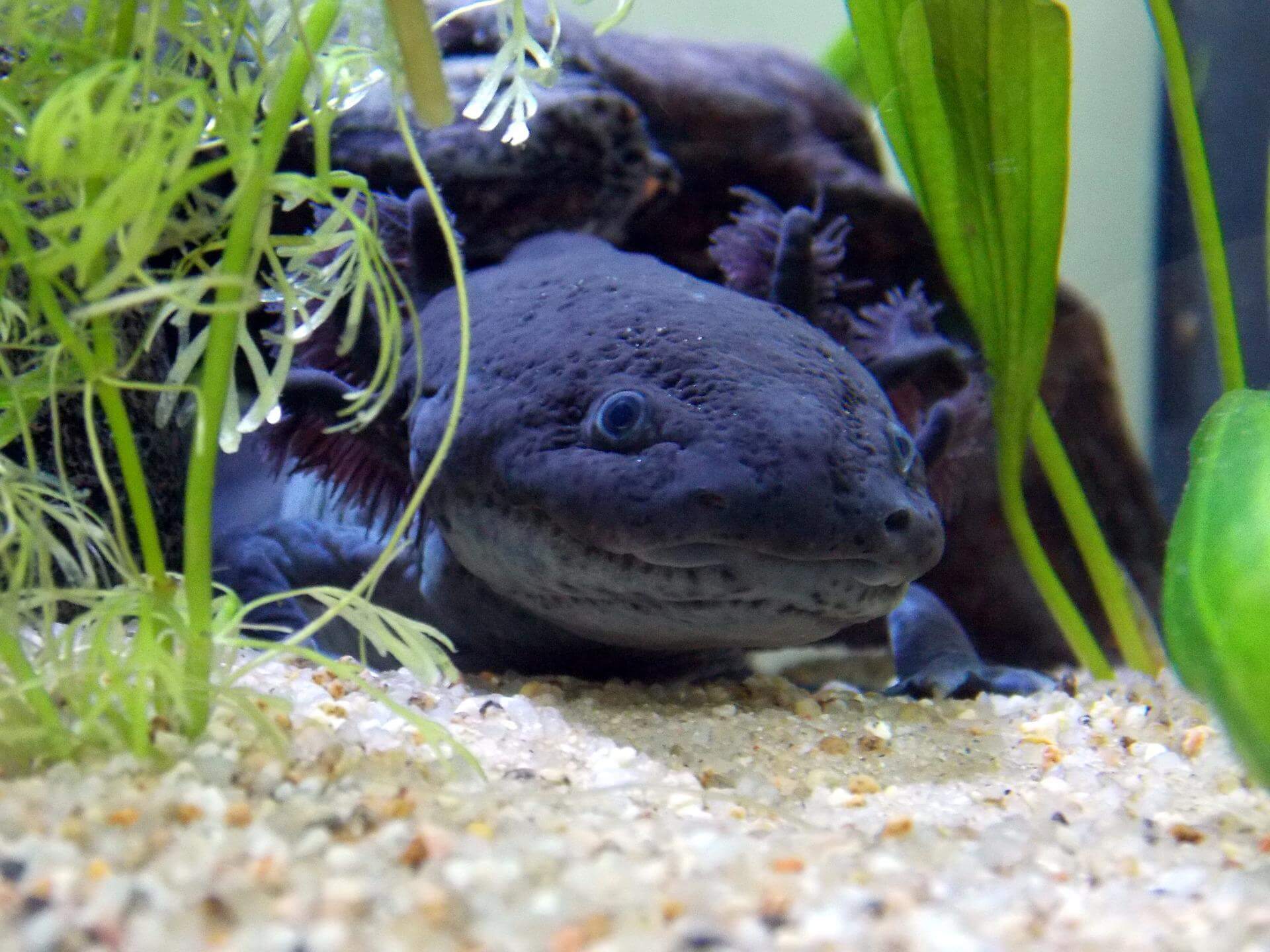
These little salamander creatures have become go-to choices for people who want cute and charming pets in their life. The strange with the blue axolotl is that it is not actually blue – it is more of a grey or even black coloring. Still, for many, the light we see the axolotl in usually makes them look more blue-tinted than grey or black. Some refer to these, then, as the Black Melanoid axolotl. For the purposes of this guide, though, we will call them a blue axolotl.
Interested in owning one? Then use these tips to your advantage!
What is a blue axolotl?
Hailing from Southern Mexico City, the blue axolotl is most commonly found in two lakes: Calcho, and Xochimilco. They are seen as some form of distant relation to the ancient Aztec god, Xolotl, hence their name.
They make very intriguing pets that you could have in your life, but they might not be for everyone. They tend to live for around a decade, though extending this to around 15 years is not uncommon. They typically reach a size of around 10” to 12”, and we have to say that they are NOT good for beginners. If you have never owned a pet before, choosing a blue axolotl as your first pet to begin with is not something we recommend.
These little creatures have very specific care needs and instructions. For example, they have particular temperature needs of around 60F to 64F, and they also need a tank size of at least 20 gallons. They also need quite oddly shaped tanks, preferring something that is long as opposed to a square-style tank.
For those who are looking for a pet salamander and have relevant experience, though, these could be a wonderful place to go.
What does a blue axolotl look like?
The first thing to note is, as mentioned, the confusion around their coloring. The ‘blue axolotl’ is not blue; they are more of a slate grey or black coloring. However, when in most lights, they look blue. They are spotless and fleckless and thus can look a little strange. They look extremely smooth, but they do have little gills on their necks.
The other factor most will notice is the facial look. These creatures look like they always have a big, wide smile on their face. This is a natural make-up of their face, though; even if a blue axolotl is distressed, it tends to look pretty happy!
They also, unlike many other forms of sea life, have limbs. This means that they can somewhat walk around the place – in a way. They do tend to rarely leave the water, though, so it is highly unlikely you will see their rather odd-looking attempt at walking. Like other forms of salamander, too, they can regrow and regenerate limbs after injury.
If your blue axolotl was to damage parts of its body like its gills or its limbs, even its eyes, then it can regenerate. It does take time, though; they aren’t superheroes!
Caring for a blue axolotl – is it possible?
The first thing that many people need to focus on when they want to get a blue axolotl is the care procedure. We will try and break down some of the most important factors below for your own information.
What kind of tank does a blue axolotl need?
So, the first thing to note is that the blue axolotl needs a 20-gallon tank. 10-gallon tanks are big enough for the young blue axolotl, but they grow up too fast to make this viable. We recommend you get a longer tank as opposed to a deep tank. They tend to like to float around towards the surface or along the floor, so having more places to search in a longer tank tends to make more sense.
You should also make sure that their tank has a cover that can be placed on. The blue axolotl is infamous for getting out of their tank despite it not being in their best interest. In terms of tank quality, you need top-class water filtration systems and you need a gentle, calm water flow. You need to keep a constant eye on water flow and filtration otherwise you risk damaging their gills and injuring them.
You should be looking for brackish water to fill up the tank with, so use a combination of salt and fresh to get to that level. Each week you need to make sure you get rid of waste via the substrate and then change the water by at least one fifth per week. Avoid cleaning the water or draining the water entirely, though, as this can hurt the water balance and stress them out.
Ensure your tank has lighting in it, too. Artificial lighting is good enough, but most blue axolotl prefers to be in low light settings. As such, avoid putting them in direct sunlight.
Temperature-wise, focus on making sure your blue axolotl is kept in a temperature range of 60F to 64F. Anything above this can make them stressed out and ill. Temperatures below this will hurt their productivity.
Fill the tank with substrate – simple sand is enough. Avoid using things like rocks and gravel as this can hurt the axolotl through ingestion. Anything smaller than 3cm should be ignored. Large rocks they cannot possibly eat give them somewhere to hide, which they seem to love.
What do I feed my blue axolotl?
If you choose to have one of these animals at home, you need to get used to feeding them a mix of pellets and live food. Feed them once per day, and adults should be fed once every two to three days. Keep a record and an alarm system so you can keep them well-fed.
Food should include everything from salmon pellets to red wigglers and nightcrawlers. Buy frozen worms from a pet shop and ensure they are meant for feeding, not for fishing; fishing worms can carry parasites. Avoid putting your blue axolotl in with anything below 3cm in size, as they tend to see anything smaller than 3cm as edible – yes, even another axolotl!
Is keeping a blue axolotl as a pet normal?
Though they are quite rare as pets, this comes down to their challenging nature to raise and look after. They are, though, absolutely fascinating to watch. Once you understand their routine, their care needs, and their lifestyle, you can find that you get a decade-plus of wonderment from the blue axolotl.
They are great pets because they are so interesting to watch. You will see them moving around their little habitat and exploring everything. Have you ever watched a child play a video game? Have you noticed how explorative they are? Well, a blue axolotl is a bit like that!
They love to be watched and have a habit of even watching you for a little while as well. However, you should keep in mind that you should avoid handling your blue axolotl unless it is in danger and needs you to actively get involved. Sensitive and weak skin means that they could be easily harmed if you pick them up and use excessive force.
Given they are a high level of pet, they need someone experienced with keeping a tropical freshwater tank in good condition. They are not ‘normal’ pets due to the challenges involved, but they are good pets.
Keep in mind that they tend to be hardy little creatures if you keep them in an environment that is safe for them. Pay attention to the environment, speak with the pet shop you buy from, and follow the recommendations they provide as well as the above suggestions. Keep an eye out for fungal infections of the gills, and also for obstructions due to their desire to eat, well, anything!
Lastly, make sure that your blue axolotl is kept alone in the tank. They are prone to eating smaller creatures, and anything larger might eat at their gills which can lead to death. Their unique water needs are also unlikely to be suitable for most other traditional pets kept in the water.
Summing Up
To make sure you get the best experience, then, focus on the above information. Having a blue axolotl is a special experience, but they do need lots of time, care, and patience. Once you settle into a routine, though, things can get easier. Keep the above in mind, though, and you can make it much easier to raise a happy and healthy blue axolotl.
Given they can cost you as much as $100 (or more) to buy, make sure you take the information above seriously. Provide them with a suitable place to live, and you can make sure your blue axolotl has a happy and healthy life. Deviate slightly from the recommendations, though, and things can soon become awkward and awry.