
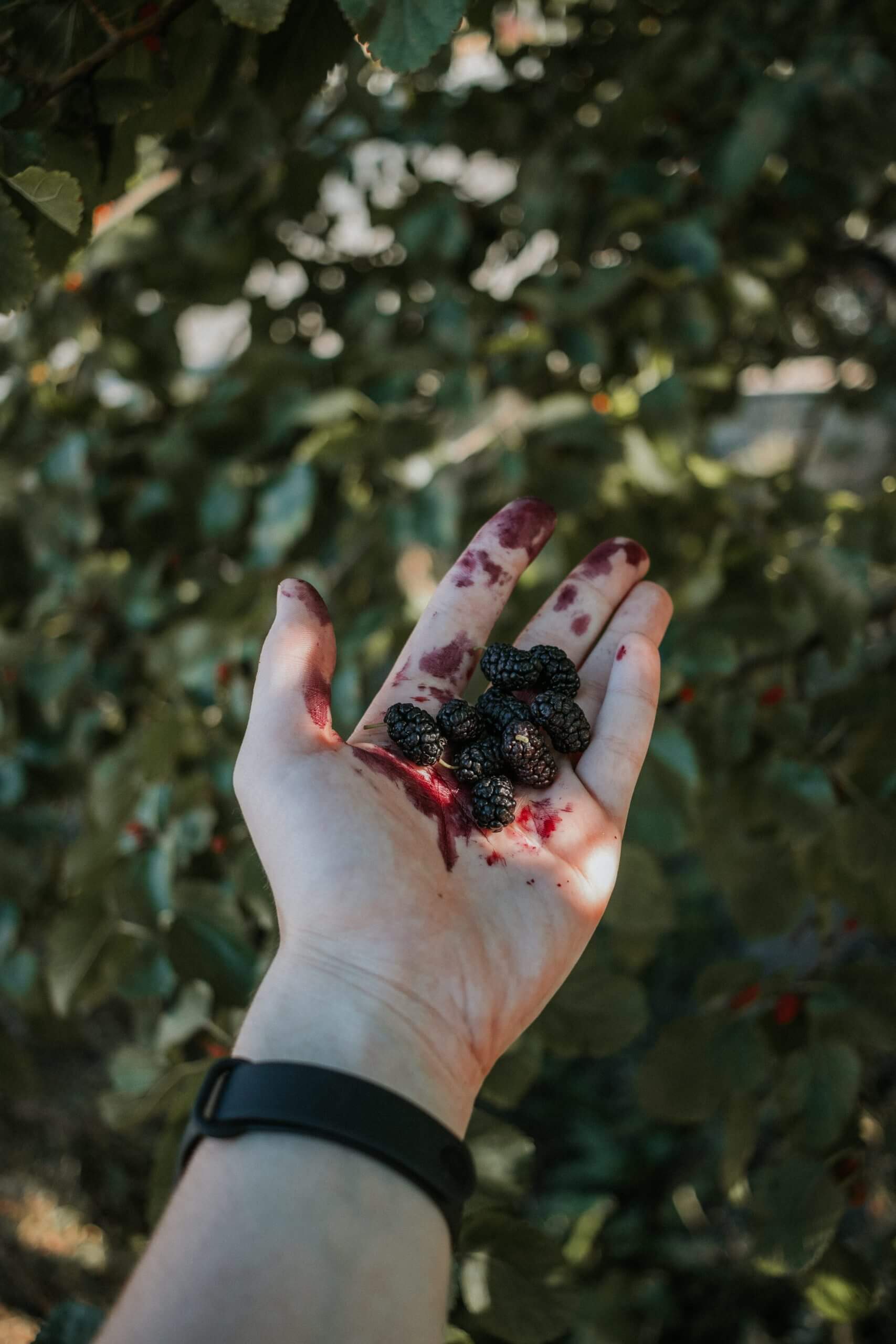
When we stumble upon a mulberry tree on a beautiful summer day, it’s hard to resist plucking a few of those juicy fruits. If your dog is by your side, their curious eyes might spark a question: Can dogs eat mulberries? And are they safe?
In short, yes, dogs can enjoy mulberries safely, but with some guidelines to keep in mind.
Mulberries, just like many other fruits, pack a nutritious punch. They are a rich source of antioxidants, vitamins, and minerals, all of which are beneficial to your dog’s health. Antioxidants help fight oxidative damage, while vitamins like A, C, and E support various body functions, including the immune system, vision, skin health, and more.
However, while the fruit is safe, the rest of the mulberry tree might not be. The leaves, stems, and roots of some mulberry tree varieties can be toxic to dogs if ingested. If you’re lucky enough to have a mulberry tree in your backyard, it’s a good idea to keep your pup supervised while they’re exploring near it.
Though mulberries are nutritious, they also contain sugar. While the sugar in fruit is natural, it’s still sugar, and too much can lead to weight gain and potentially contribute to diabetes over time. As such, mulberries should be given as an occasional treat rather than a regular part of your dog’s diet.
Also, any new food can potentially cause digestive upset in dogs. If your dog has never had mulberries before, start with a small amount and watch for any signs of stomach discomfort, diarrhea, or other adverse reactions.
To serve mulberries to your dog, make sure they’re clean and ripe. Remove any stems or leaves and offer the berries whole if they’re small or cut them in half if they’re larger to prevent choking.
In conclusion, dogs can safely eat mulberries in moderation. The key is to ensure the fruits are clean, ripe, and served in appropriate portions. It’s always wise to consult with your vet when introducing new foods into your pet’s diet. They can provide guidance based on your dog’s size, breed, age, and overall health.