
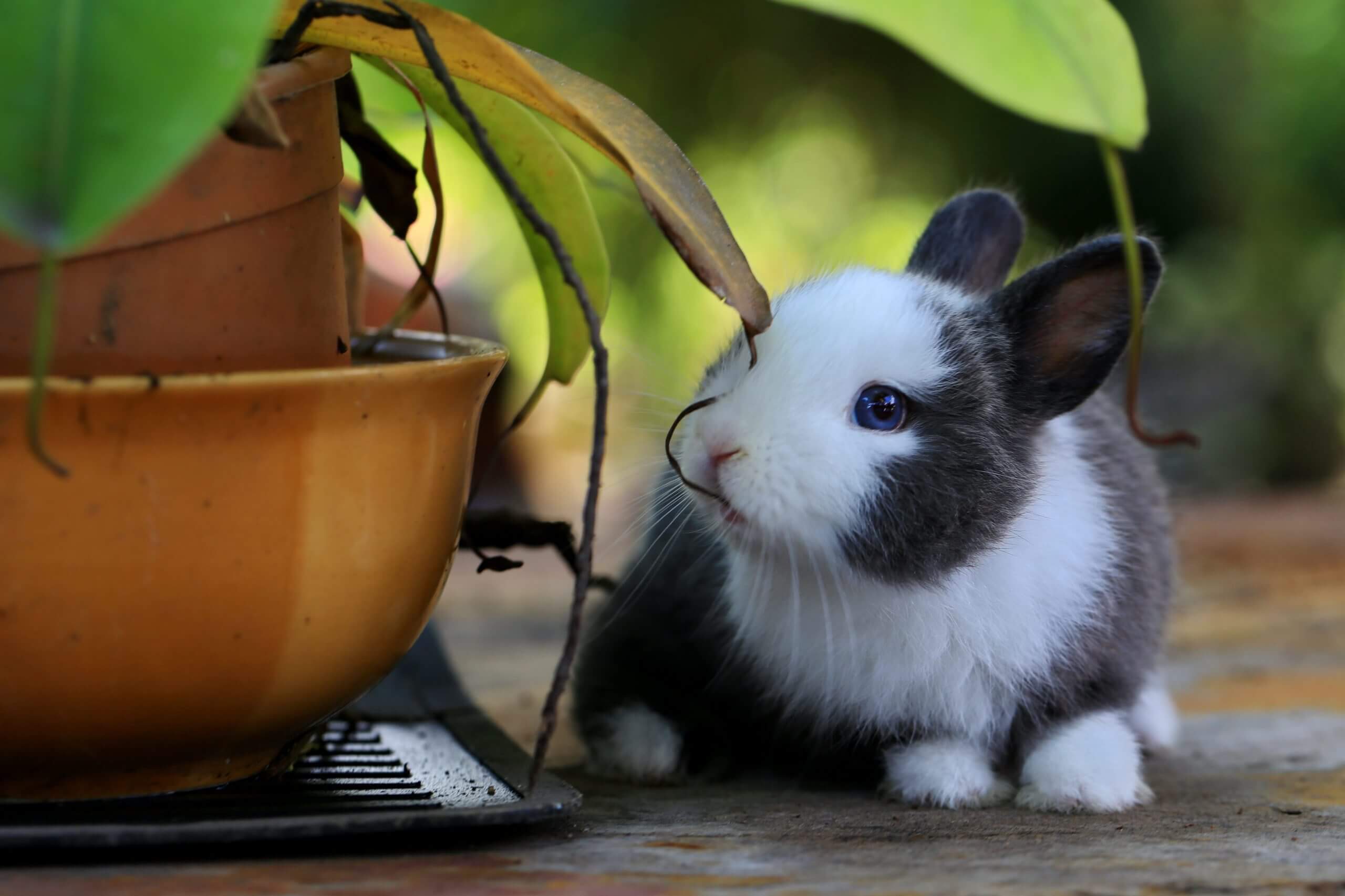
Baby rabbits are possible the cutest animal in the world. Small and fluffy, baby rabbits have floppy ears and puffy tails, fitting easily in the palm of your hand. They are so adorable it’s hard not to squeal in delight anytime you see some baby rabbits.
Bunnies are so lovable that it’s easy to see why so many people want them as pets. However, did you know that baby rabbits are not even called bunnies? It’s a surprise to most people, as baby rabbits are almost universally known as bunnies!
Of course, this begs a few questions. What are baby rabbits called? Why do we call them bunnies instead? Where on earth did the term bunny come from? Why have we been misled for all these years?
It’s time to answer some of these hard-hitting questions about baby rabbits!
What are Baby Rabbits Called?
Let’s get the main mystery out of the way first. Baby rabbits are not called bunnies but are instead known as kittens.
Yes, baby rabbits are called kittens! This term is often shortened to kits or kitties, which are arguably just as cute a name as bunnies.
It’s an odd term for sure considering we all recognize kittens as being the name for baby cats. The reason baby rabbits are really called kittens is that they’re classified in the same group as cats and foxes.
So, the term kitten doesn’t just refer to baby cats, but also to baby foxes and baby rabbits.
But why the sudden change in name? Why did we stop calling baby rabbits kittens and started calling them bunnies?
Why are Baby Rabbits Called Bunnies?
To find out why baby rabbits are called bunnies, it’s time to take a step back in time to the 18th century.
Coneys and Bunnies
At this point in time, adult rabbits weren’t even called rabbits – they were called coneys. Baby coneys were instead called rabbits. However, as is common with most languages, certain words fall in and out of popularity.
So, rabbits eventually became the most widely used term to describe coneys by the 18th century.
But where do bunnies come into all of this? Well, it is thought that the term bunny comes from a mispronunciation of the term coney. If you say the names back-to-back quickly enough, there are similarities between the pronunciations!
Also, during the 18th century, the term bunny was used to describe a young girl. Perhaps the connection between a young female child and a baby rabbit (e.g., being small, cute, delicate etc.) led people to use the term interchangeably.
Bunnies and the Easter Holidays
Of course, another big factor that might have led to the term bunny becoming more widespread is the Easter Holiday.
The Easter Bunny is a popular figure of the Easter Holiday, originating as a folklore tale from Lutheran Germans. This story involves a character originally known as the Easter Hare, a rabbit that came and gifted good children with easter eggs.
The Easter Hare appeared during Eastertide each year, deciding on whether children were good or bad, not unlike Santa Clause.
If a child was deemed good, the Easter Hare gave them a colored easter egg from their basket. The Easter Hare would often bring toys and candies to children too, a tradition that many continue to enjoy today.
As you can, the tale of the Easter Hare shares many similarities to that of Santa Clause. They both reward good behavior on the eve of a major Christian holiday, gifting toys and candies during the holiday.
In any case, the story of the easter bunny gifting eggs dates first arrived in North America during the 18th century. German immigrants that settled in the modern Pennsylvania Dutch area spread the story of the Easter Hare.
However, the Easter Hare was eventually dropped, being replaced by the Easter Bunny. It’s not known why bunny was preferred over the hare, with some suggesting it was a more child-friendly term.
It’s interesting that there is no specific origin of the term bunnies being used for baby rabbits. There are several theories that we’ve mentioned above, but pinpointing the exact origin is impossible.
In any case, the term bunny is so ingrained in modern English that it’s now the most common term for baby rabbits. While it’s certainly accurate to call baby rabbits kittens, you’ll likely raise a few eyebrows, even if it’s correct!
Other Interesting Terms for Rabbits
So, you’ve just learned that baby rabbits are called kittens, so want to go further down the rabbit hole. We’ve got you covered with a guide to rabbit terminology, so you’ll never get any rabbit-related terms wrong again!
Lagomorph
Lagomorph is the scientific term for mammals that include rabbits and hares. There are two living families of lagomorphs – Leporidae and Ochotonidae.
Leporidae includes rabbits and hares, while Ochotonidae include pikas. Pikas are small relatives of rabbits that are native to mountain regions, including the Rockies and Appalachians.
Hare
Hares and rabbits are often mistaken for each other, yet there are some notable differences between them.
For example, hares are generally much larger than rabbits. They have bigger ears, and longer hind legs while being much faster. Hares don’t have burrowing tendencies like rabbits, preferring to hide amongst foliage for their safety.
Another interesting fact about hares is that their coats change in line with the seasons. For instance, during the colder winter months, a hare’s coat takes on a lighter white color. During the warmer seasons, their fur becomes a more traditional grey or brown color.
Buck
A buck is a name for an adult male rabbit. Yes, this is the same name given to a male adult deer too!
Doe
A doe is a name for an adult female rabbit, the same term used for an adult female deer.
Dam
A dam is a name given to the mother of a baby rabbit. A dam is always ovulating, so can get pregnant with a new baby rabbit right after giving birth!
Sire
A sire is a name given to the father of a baby rabbit. When he’s ready to mate, he’ll thump his feet or round around the dam.
Warren
A warren is a term for the underground tunnel network where rabbits live. Rabbits create various burrows inside a warren, providing them safety and shelter from predators. A warren has enough space to protect a group of rabbits, who work together to create a safe underground shelter.
Rabbits prefer to spend the daytime sleeping in the warrens, leaving during dusk when there are fewer predators. Warrens are spacious, often reaching depths of 10ft and spreading over 100ft wide. This impressive size offers great protection from larger predators that attempt to reach inside the warren.
Burrow
A burrow refers to the small chamber built inside of a warren. Warrens usually feature multiple burrows throughout their underground network.
Each burrow averages around 1-2ft, offering enough space for the rabbit to sleep comfortably during the day. Baby rabbits (or kittens!) are also reared inside a burrow, so it’s lined with animal hair and grasses for insulation.
Fluffle
A fluffle is the name of a group of rabbits living together in a warren. They’re also known as a herd or colony, although the term fluffle is far more interesting!
These groups typically consist of between 6 and 12 adult rabbits. A fluffle is led by a dominant adult male or female rabbit, making important decisions on behalf of their group.
Rabbits have a much better survival rate by grouped together. For instance, each rabbit within the fluffle will alert other rabbits to any immediate dangers, such as nearby predators. Warning signals include making distress calls and thumping their hind legs.
A fluffle rarely leaves the area close to their warren, allowing them to quickly escape underground when altered to danger.
Nest
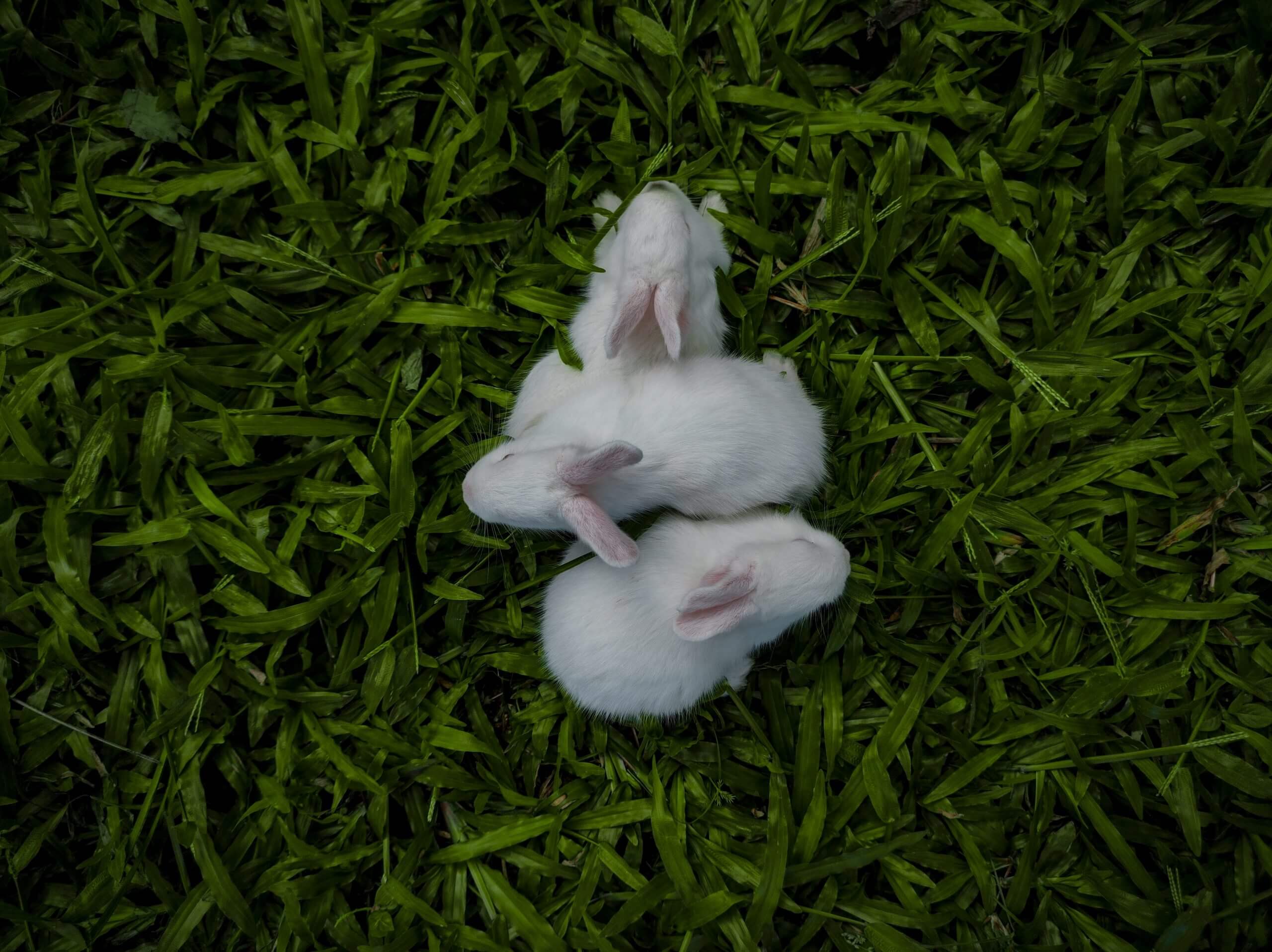
A nest is a name given to a group of baby rabbits. Also known as a litter or kindle of kittens, a nest has around 2-6 baby rabbits. However, there may be up to five separate nests within a warren at one time, meaning potentially a lot of kittens!
A doe’s gestation period is usually around 30 days, resulting in a lot of nests throughout the year. Plus, a doe can get pregnant as soon she gives birth, so there are always likely some new nests on the way.
Conclusion
If you’ve ever wondered what baby rabbits are called, the above info should clear up any confusion! Yes, most people call baby rabbits bunnies instead of kittens, which is more of an everyday term with unknown origins.
There are a few guesses as to why we call baby rabbits bunnies when we should be calling them kittens. Some of the theories make sense, especially considering the term bunnies probably originated centuries ago!
Of course, it’s hard to change the habit of a lifetime, which is why most of us will keep baby rabbits or bunnies! But next time someone does, make sure to let them know that baby rabbits are, in fact, kittens!